Bhaskar Pandey
Download résuméContactArticles

Bhaskar Pandey, AI & Automation Solutions Engineer

AI & Automation Solutions Engineer

Google Certified Generative AI Leader

Bhaskar Pandey, listening for the next question

Contact Terminal

ready

Use this terminal to ask Bhaskar about his published work and experience and get LIVE answers.It uses a RAG to retrieve, augment and generate responses from BrainVault - his digital "Second Brain"

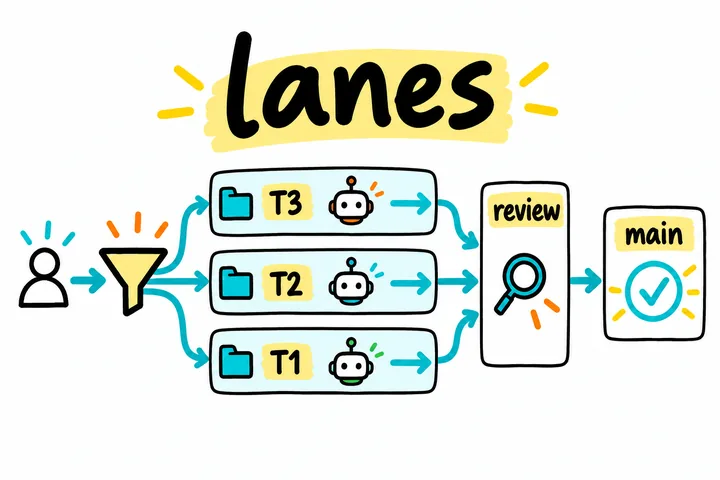
I design and build AI and automation systems on more than a decade of enterprise network and security engineering. I solo-built and launched LearnStack OS, an AI learning platform with 34 active members; a retrieval-augmented knowledge system; and Agent-Team, a multi-agent delivery toolchain. Claude Code and Codex are my primary development environments. Agent-Team is the orchestration harness I built to run that work, including this site. I give it a goal, it breaks the goal into small bounded pieces, and each piece goes to a specialist agent (orchestrator, developer, code reviewer, or visual reviewer) tied to a model and reasoning-effort level that fits the task. Each agent works in its own Git worktree under file-ownership rules, so two agents never step on the same file. Work gets reviewed and fixed until it clears the acceptance gates, then a final reconciliation pass merges everything. Runs can pause and resume, keep recovery evidence, fire lifecycle hooks, and fail closed when a policy check fails. Ask me anything about my work in full sentences or pick a question from below: 1. Tell me about LearnStack OS 2. What's your experience with Claude and ChatGPT? 3. What's your experience with front-end design?

For recruiters and hiring managers

Where the role meets the work.

Role names vary. These examples show the implementation, delivery, and leadership evidence behind my AI and automation work.

AI engineer & AI implementation engineer

I build systems with large language models (LLMs), retrieval, and explicit data boundaries. LearnStack OS connects a content corpus to placement and learning paths; BrainVault uses OpenAI embeddings and pgvector for semantic search.

Explore LearnStack OS →Explore BrainVault →

AI-forward engineer

Claude Code and Codex are part of my spec-driven development practice. I built Agent-Team to orchestrate specialist AI agents through isolated work, independent review, and acceptance gates.

Explore Agent-Team →

Automation engineer

I mapped a client document process into ten stages from secure intake to attorney review and delivery. Deterministic rules and approved templates govern consequential output.

Explore the workflow →

Generative AI leader

My Google Cloud Generative AI Leader certification accompanies hands-on AI product architecture and earlier enterprise engineering team leadership.

Read the résumé →

Experience that crosses boundaries.

Product judgment, technical depth, and accountable delivery in the same room.

  1. Almora Technology

    Founder & Solutions Engineer

    Independent AI and automation consulting, with discovery, architecture, threat modeling, implementation, and handoff.

  2. World Wide Technology

    Senior Engineer

    Client-facing network and security delivery across requirements, solution design, cutover, and on-call operations.

  3. Epicor Software

    Senior Network Engineer · Team Lead

    Led perimeter access control and change management for a global data-center environment.

  4. Rackspace

    Network Security Engineer

    Customer solution design, implementation, compliance-conscious security engineering, and live incident response.

  5. San Antonio Water System

    Network Systems Engineer

    Supported routing, switching, wireless, radio networking, and operational monitoring systems.

Skills.

AI engineering first, on a long-running foundation in enterprise security and delivery.

AI & Automation 21

  • Prompt engineering
  • Harness engineering
  • Graphs & loops
  • Agent context & memory engineering
  • MCP server & API creation
  • Multi-agent orchestration
  • Advanced knowledge of Anthropic & OpenAI models
  • Multi-modal agent experience
  • Custom AI agent deployment · Hermes Agent & n8n
  • Model & reasoning-effort routing
  • Named entity recognition (NER) · GLiNER2
  • Structured data extraction with schema validation
  • Parsing & classifying unstructured data
  • Text classification & relation extraction
  • Rules-first extraction with LLM inference
  • Versioned prompt & parser metadata
  • Human-in-the-loop workflow design
  • Prompt-injection defense
  • Retrieval-augmented generation (RAG) · pgvector
  • Claude API · OpenAI · OpenRouter
  • AI-assisted development · Claude Code & Codex

Frontend Design 7

  • Next.js App Router
  • React
  • TypeScript
  • Product definition & information architecture
  • Visual design & user-facing copy
  • Docusaurus documentation sites
  • Playwright & Vitest testing

Backend Infrastructure 13

  • TypeScript, Python, SQL & Shell
  • PostgreSQL · Neon & Supabase
  • Drizzle ORM & migrations
  • Upstash Redis
  • Better Auth · sessions & typed permissions
  • Vercel · Blob, Workflow, hosting
  • GitHub Actions CI/CD & secret scanning
  • Git worktrees & checksum-signed release automation
  • Ubuntu Server, systemd & Tailscale
  • Threat modeling & fail-closed authorization
  • Enterprise network security · Cisco, Palo Alto, F5
  • PCI-DSS & HIPAA compliance
  • Delivery leadership · client engagements & on-call operations

Applied AI engineering

RAG and MCP systems, built to run.

I connect trusted content to useful workflows through retrieval, then give agents narrowly scoped tools through Model Context Protocol (MCP) servers.

01 / Retrieval

Retrieval-augmented generation

Learning platform

LearnStack OS

Retrieval over a chunked content corpus supports placement assessment, personalized learning paths, and in-lesson prompt tools.

Explore the case study →

Knowledge system

BrainVault

A local note vault syncs to Supabase for semantic search with Postgres, pgvector, and OpenAI embeddings. Operational frontmatter is stripped before embedding so retrieval focuses on the note content.

Explore the case study →
02 / Tooling

MCP server authoring and deployment

In-development bot team · deployed servers

AlmoraBots

I built and deployed Python MCP servers for Mason (deal scouting), Parker (buyer-matching research), and Maya (marketing). Signed bot packages expose task-bound tools: Maya’s maya_content_research returns approved context only for the brand assigned to her current task. Isolated Hermes Agent profiles use tool allowlists and scoped keys for authenticated product reads; consequential writes require product approval. The stack runs on a self-hosted production platform.

Live server · client registration pending

LearnStack Article Creator

I authored the Streamable HTTP JSON-RPC endpoint at /api/mcp. Seven article tools cover creation, rewriting, importing, checking, publishing, scheduling, and authoring options. OAuth scope checks, Origin validation, and idempotent writes protect the endpoint. External OAuth client registration is still pending.

Deployed remote server

BrainVault MCP

A TypeScript server on Supabase Edge Functions exposes 11 tools for semantic search, capture, note management, review, and statistics over Postgres and pgvector. OAuth 2.1 gives clients registration and consent; database row-level security limits what each client can read and write.

Explore BrainVault →

MCP integration

Legal Document Creator / Serena

I configured the Serena MCP server for Codex to navigate and inspect the attorney’s Legal Document Creator codebase.

Explore the client workflow →

Verified credentials.

Current certifications, independently verifiable through Credly.

Current credential

Generative AI Leader Certification

Google Cloud

Verify on Credly
View all credentials on Credly

For teams that need the strategy and the implementation.

Let’s make the complicated part dependable.

Contact for consultation

Describe the engagement. Bhaskar replies directly.

bhaskar.knp@gmail.com

For recruiters and hiring managers

Hire

Embed a systems-minded engineer who owns an AI-enabled product or delivery problem end to end.

Hiring conversation

Share the role and its context. Bhaskar replies directly.

bhaskar.knp@gmail.com

For teams and founders

Consult

Clarify the workflow and engineering boundary, then bring accountable technical context to product direction, delivery decisions, and a practical first implementation.

Contact for consultation

Describe the engagement. Bhaskar replies directly.

bhaskar.knp@gmail.com

3D front end for autonomous real estate agents

Almora Office

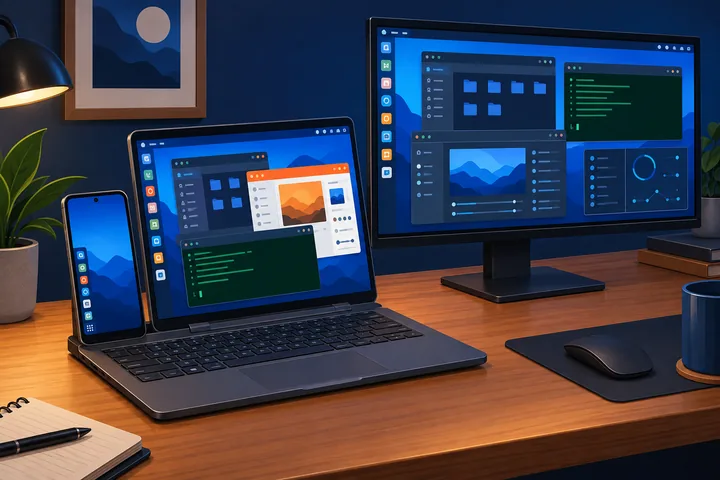
A bright miniature 3D office seen from above, with small faceless robot workers at desks and one desk lit by a warm amber spotlight ring.
Agents work at their desks in a 3D office while the user watches and steps in.

A 3D office where you can watch your real estate AI agents work and step in on the tasks you gave them.

What it is

Almora Office is a visual front end for a set of autonomous real estate agents. An autonomous agent is a program that takes a job, works on it step by step without being told each step, and reports back. The agents run on the Hermes Agent platform. Almora Office is the window you look through to see them.

The window is a 3D, office-like space. You see the agents working, the way you might glance across a real office and see people at their desks. When a task you delegated needs you, you can act on it from there.

This project is in development. The repository has no public source link, so this page describes what the project is for and what I have built so far.

Why it exists

The agents do real estate work on tasks that a user hands to them. Handing off a job is only half of delegating. The other half is being able to see how the job is going and to step in when it needs you.

Almora Office is the front end for that second half. A front end is the part of a program that a person sees and uses, as opposed to the work that happens behind it. Mine shows the agents in a 3D, office-like environment, and it lets users take action on the tasks they delegated.

Think of a manager who walks into the office to check on a project. The manager does not read a stack of reports. They look around, see who is working on what, and talk to the right person. Almora Office is built around that same picture.

How it works, part one: the agents and their jobs

I am building autonomous agents on the Hermes Agent platform. A platform here means the base system the agents run on, much like a game console that many different games run on. The agents cover four kinds of real estate work, plus other delegated tasks.

The first is market analysis. That means studying an area to understand how it is doing, such as what is selling and what is changing. The second is property due diligence. Due diligence is the careful checking you do before you commit to a purchase, like reading the fine print and inspecting the car before you buy it.

The third is property evaluation and comps. Evaluation is working out what a property is worth. Comps, short for comparables, are similar nearby properties used as a yardstick. If you want to know what a house is worth, you look at what comparable houses sold for.

The fourth is buyer research and outreach. Buyer research means finding who might want a property. Outreach means getting in touch with them.

Each of these is a different kind of task, with its own questions. A market question is about a whole area. A due diligence question is about one property. A buyer question is about people. The agents are built to take on this range of work.

Four small scenes in a row: a city map, a magnifier over a house, a house beside two similar houses on a scale, and a paper plane leaving a stack of folders.
The agents cover four kinds of real estate work.

How it works, part two: see the agents and act on their tasks

From the user's side, the flow is short. A user delegates tasks to the agents. The agents work on them. The user then sees those agents in the 3D office-like environment and takes action on the tasks they delegated.

Seeing and acting are the two things the front end exists to do. Seeing means the agents are visible while they work, in an office you can look around. Acting means the user can respond to the work from that same place, instead of going somewhere else to do it.

A visual front end like this sits on top of the agents. The agents do the real estate work on Hermes Agent. Almora Office is the layer that shows that work to a person and gives the person a way to respond.

I have not published the technical details of how the front end talks to the agents, so I will not describe them here. What is settled is the split: the agents run on Hermes Agent, and Almora Office is the customized visual front end for seeing them and acting on their tasks.

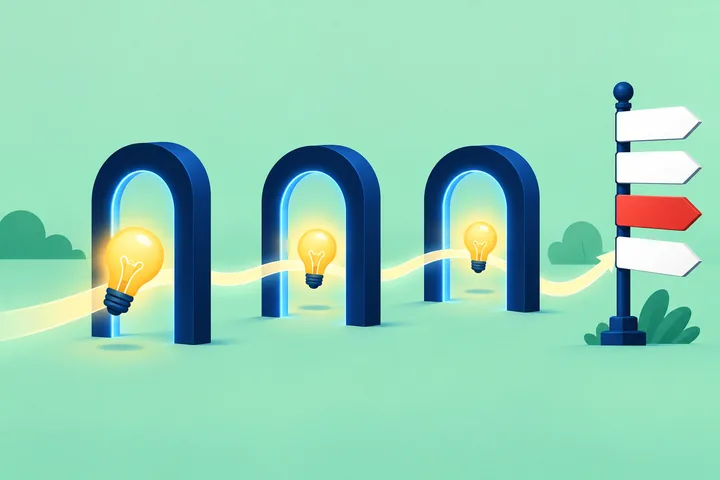
A three-step path: a task card sliding into an inbox tray, a wide window looking into the office, and a big lever beside a returned card.
The user delegates tasks, sees the agents in the office, and acts on the tasks.

What the page does and does not show

Almora Office is in development, so there are no screenshots, customers, usage numbers or results to show yet. I would rather say that plainly than fill the page with things I cannot back up.

I am building the agents, and I created the customized front end. Hermes Agent is the platform underneath them.

My other project, AlmoraBots, also uses Hermes Agent. There, isolated Hermes Agent profiles use tool allowlists, so each bot reaches only the tools its task needs. An allowlist is a short list of what is permitted, with everything else blocked. I mention it only because both projects run on Hermes Agent.

What I built it with

The agents are built on the Hermes Agent platform. The front end is a customized visual layer that presents those agents in a 3D, office-like environment.

I am building the autonomous agents for their real estate tasks, and I created Almora Office, the customized visual front end where users see the agents and take action on their delegated tasks.

Where it stands today

Almora Office is in development. I am building it now, and it is not finished.

The shape of it is clear. Autonomous agents do market analysis, property due diligence, evaluation and comps, and buyer research and outreach. A customized 3D front end lets a user see them work and take action on the tasks they delegate. The rest is still being built.

Glossary

Hermes Agent
The agent platform that the autonomous real estate agents run on.
autonomous agent
A program that takes a job and works through it step by step without being told each step, then reports back.
market analysis
Studying an area to understand how its property market is doing.
due diligence
The careful checking you do on a property before you commit to buying it.
comps
Comparables, meaning similar nearby properties used as a yardstick for what a property is worth.
front end
The part of a program that a person sees and uses, as opposed to the work happening behind it.

Key facts

  • Hermes Agent platform
  • Market analysis, due diligence, comps and buyer outreach
  • In development, no public source link