guides · Bhaskar Pandey
What Does an Agentic AI Engineer Do? (And How to Become One Without Paying for Courses)
What an Agentic AI Engineer does, the six skill areas the job demands, and how free courses from top universities and AI labs can get you there.

An email lands in a company's support inbox: "My order never arrived, and I need it by Friday." A piece of software reads it and looks up the order. It sees the package is stuck at a depot, drafts a reply with a new delivery date, and queues a replacement. Then it stops. A replacement costs money, so it asks a person to approve it before anything ships.
That software is an agent. Many teams want agents like this, and fewer people know how to build them so they work every time. The person who builds them is an Agentic AI Engineer.
What an Agentic AI Engineer Does
An AI agent is a language model that uses tools in a loop until a task is done. The model is the part that reads and decides. A tool is anything it can call, such as a database lookup, a calendar, or an email service. The loop is simple: the model thinks about what to do, uses a tool, looks at the result, and decides whether it is finished.
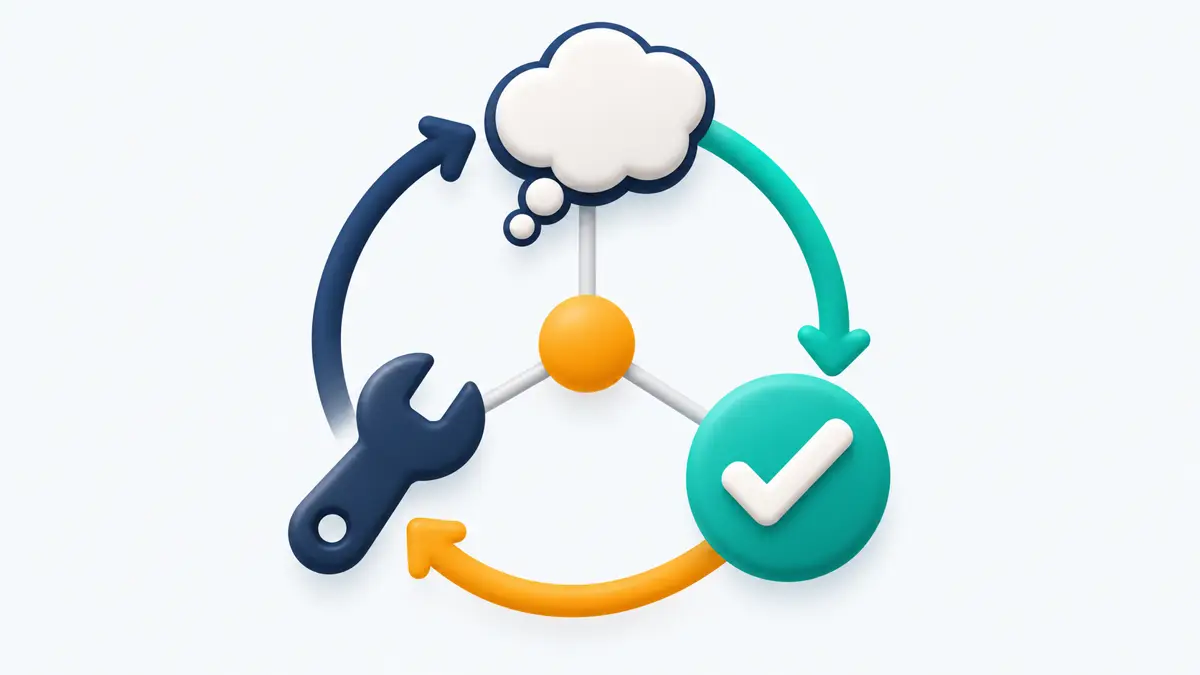
A chatbot answers a question and waits. An agent takes a goal and works toward it. That changes the job. A prompt writer tunes words. An agentic engineer chooses which tools the agent gets, designs the steps it follows, and makes it dependable, safe and affordable. Then they connect it to the systems a business already runs.
Reliability is most of the work. An agent that gets the right answer nine times and a costly wrong one on the tenth is not ready. Much of the job is finding that tenth case before a customer does.
Here is what that looks like in two places. In a large company's IT team, an agent reads a ticket about a locked account, checks the identity system, and proposes a fix for an engineer to approve. In a small plumbing business, an agent reads a missed-call voicemail, books the visit on the calendar, and sends the customer a confirmation. The settings differ. The skills underneath are nearly the same.
The Six Areas You Need to Know
Think of the job as six areas, each building on the last.

Foundations and Frameworks
You should be able to explain the agent loop and the common ways to arrange it: one model calling tools, a model checking its own draft, or a lead agent handing jobs to helpers. You should also be able to build one from scratch before reaching for a library. After that come the major agent frameworks, which are ready-made toolkits for the same job. Knowing how they differ lets you pick one on purpose instead of by habit. Building the same small helpdesk agent in more than one toolkit is a good way to see the differences for yourself.
Tools, Context, Memory and Data
An agent is only as good as the tools it is given. A tool with a vague name or a confusing error message gets misused, so you learn to design them the way you would design a good form. You also learn the standard ways to connect an agent to other systems, and what belongs in the agent's working memory (the "context", the text the model can see right now). Long-term memory covers what it should remember between sessions. Retrieval means finding the right company documents at the right moment.
Multi-Agent Systems and the Research Frontier
Sometimes several agents beat one. A research task might go to three agents working in parallel, with a fourth combining their findings. This area also covers newer ideas from university labs: letting an agent try several answers and pick the best, checking its own work, and improving from feedback. Some of it is still changing quickly, so part of the skill is reading papers and judging what is ready to use.
Production: Evals, Security, Identity and Operations
This is the gap between a demo and a deployed agent. An eval is a test that measures how good the agent is, so you can tell whether a change helped. You trace what the agent did on each run. You defend against prompt injection, where hidden instructions in an email or document try to steer the agent. You make sure it acts with the right permissions for the person it works for. Risky steps pause for a human to approve. And you keep costs under control, because an agent that loops all night is expensive.
Voice, Browser and Small-Business Operations
Some agents answer phones. Some work through websites that have no API, clicking and typing the way a person would. Others tie together the tools a small business already uses, such as a customer list, email, a calendar and bookkeeping. You learn to work out whether an agent saves more than it costs, using real numbers from the business.
Capstones and a Portfolio
You prove the skill by building. Two projects work well: one for a large organization and one for a small business. Each should run, have a clear definition of done, and come with code, a short demo and a written explanation. A hiring manager can skim that in minutes, and it says more than a certificate alone.
You Can Learn This for Free
Good teaching on all of this is already online at no charge. Some universities publish full lecture series on agents, and Stanford and UC Berkeley are two that do. Industry leaders run free courses and write detailed guides, including Hugging Face, DeepLearning.AI, Anthropic, OpenAI and LangChain. Open standards from groups such as OWASP and NIST cover security and risk. Some free offers may change, so check the terms on each provider's site before you start.
The hard part is not finding material. It is the order to take it in, the projects that tie each piece to the next, and knowing which parts to skip because you already know them. Without that, most people collect bookmarks and stall around week two.
How to Approach It
A rough plan is about 20 hours a week for about 12 weeks. That is an estimate, and it depends on how much you already know. The courses cost nothing, but running your own agents uses a model, and model usage fees add up as you build, so watch your spending from the first project. Learn by building. After each area, make something small that works and keep it. A weekly rhythm helps: learn early in the week, build in the middle, test what you built, then ship it somewhere you can show it.
If you have less time, stretch it out. Slow and finished beats fast and abandoned.

Follow the Full 12-Week Path
Premium members get the complete Agentic AI Bootcamp: every phase explained in plain language, the hand-picked free courses in the right order, hands-on builds with clear finish lines, and progress tracking that saves as you go.